|
|
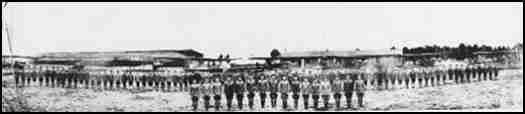
The 16 officers of the 1st Aero Squadron pose before some of the unit's 77 enlisted men and eight aircraft at San Diego, Calif. in September 1914 From The AVIATION HISTORY Magazine |
 |
|
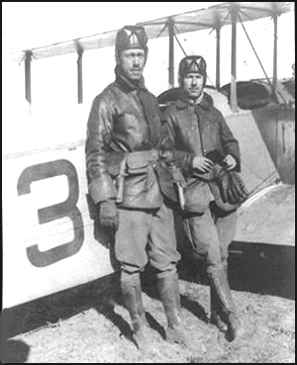
standing by plane at Mexicant front, 1916 Library of Congress Collection, 9-17-07 |
|
in This Aeroplane The Cordele Dispatch, Wednesday, April 19, 1916 Transcribed by Bob Davis - June, 2004 Lieutenant Dargue said, "There seems to be no doubt that Villa was wounded; conversations with natives and with physicians having convinced me that he was shot through both legs and one of them being broken by a bullet, while another shot lodged in his stomach. A man in that condition without medical attention could scarcely live long. |
 |
DARGUE'S DESTINY by J. J. Synder Product Details Magazine: 21 pages, 8 1/2 x 11 inches Publisher: American Aviation Historical Society Volume 38 Number 2 Summer 1993 |
|
Description: This article, which can be found in the AAHS JOURNAL, offers the definitive review of Dargue's life and career. The author, J. J. Snyder, has collected a wealth of information on his career and has illustrated the important events with numerous unique photographs. If you are interested in the complete story of this important pioneer aviator, you will be well advised to obtain a copy of the magazine. You can contact the Society by clicking on: |
 |
 |
 |
|
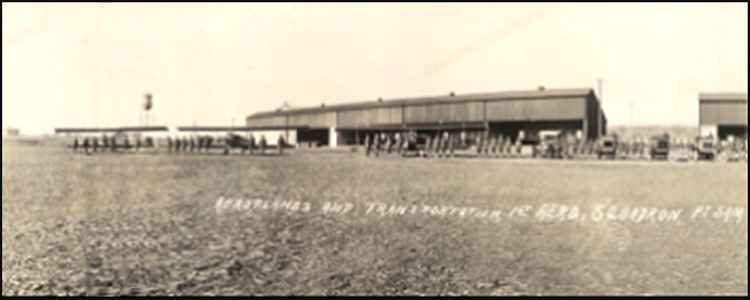
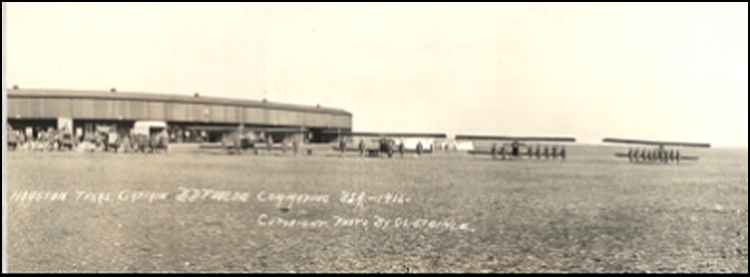
Library of Congress Collection, 9-14-07 |
|
with the MEXICAN PUNITIVE EXPEDITION, 1916 By Capt. Benjamin D. Foulois, Signal Corps, U.S. Army |
|
|
|
In Pursuit of Pancho Villa Taking part in Brig. Gen. John J. Pershing 1916 Mexican expedition was a learning experience for the U. S. Army's first air arm-- mainly in respect to its own deficiencies. by Gary Glynn "The worried young pilot flew south, deeper into hostile territory, navigating by the stars. Below the fabric-covered wings of his Curtiss JN-3 "Jenny" darkness had already obscured the unfamiliar landscape of northern Mexico. Lieutenant Edgar S. Gorrell had never flown at night before, and his engine was overheating. The flight had been jinxed from the start. Pre-flight preparations consumed more time than expected, so the eight planes of the 1st Aero Squadron had not taken off until late in the afternoon on March 19, 1916. Not long after they flew south from Columbus, New Mexico, Lieutenant Walter G. Kilner had turned back with engine problems. Navigation errors contributed to the squadron's problems. Each plane carried a different type of compass, and the aviators were equipped with poor maps. Only one flier, Lieutenant Townsend F. Dodd, had ever made a night flight before." |


|